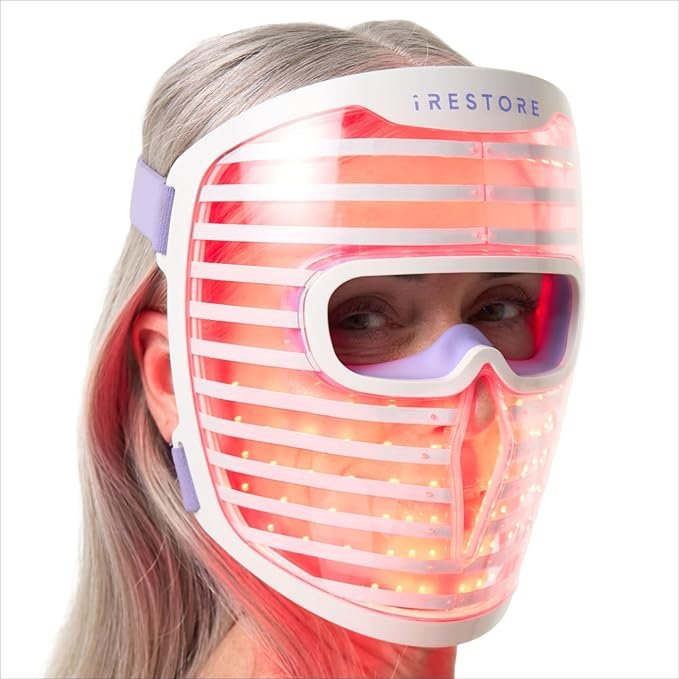
iRestore LED Face Mask Review: Does It Actually Work? Here’s the truth!
If you’ve spent any time online, you’ve seen LED face masks everywhere—celebrities wearing them, influencers swearing by them, and dozens of “AI blogs” pumping out generic paragraphs that say nothing.
This is not one of those reviews.
Let’s get straight to the point:
The iRestore LED Face Mask works because it uses wavelengths of light that dermatologists have studied for decades.
Not hype. Not a trend. Real photobiomodulation with real evidence.
Why This Mask Isn’t Just Another Gadget
The iRestore mask isn’t a cheap, 12-LED toy. It uses:
✔ Red Light (630–660nm)
✔ Near-Infrared Light (810–850nm)
✔ Blue Light (around 415nm)
✔ A full 360 LEDs for uniform coverage
These wavelengths aren’t random:
They match the same ranges used in dermatology clinics for collagen stimulation, anti-inflammatory benefits, and acne reduction.
Red + NIR = collagen support and wrinkle reduction
Blue = acne-causing bacteria reduction
This combination makes it one of the more clinically aligned consumer LED masks available on Amazon.
Let’s Talk Real Science (The Short Version)
Red Light Therapy (RLT) and Near-Infrared (NIR) light have been shown to:
- Increase ATP production in skin cells
- Support collagen and elastin
- Improve skin texture and firmness
- Reduce visible fine lines
- Calm inflammation and redness
These effects are backed by published dermatology studies—not marketing copy.
The iRestore mask uses high LED density and consistent wavelength output, which is the difference between a mask that works and one that just lights up.
My Experience / User Experience (What Actually Happens)
After consistent use (3–5 days per week), most users notice:
- Smoother skin texture
- Softer fine lines around eyes/mouth
- More even tone
- Less inflammation
- Brighter, healthier-looking skin
It doesn’t “tighten your face overnight”—nothing that claims that is real.
But it does improve overall skin quality in a steady, noticeable way.